
AI, Games, and the Environment:
A Responsible User’s Guide
A Responsible User’s Guide
These principles in practice are intended to help turn the guiding principles into action and have been developed according to the three thematic groups of the principles.

Measuring and tracking the use of AI tools across your studio is a good first step in beginning to understand the related environmental impact. This process will help you start to understand how and where AI is being used, where the environmental hotspots may be, and how the environmental impacts may affect your environmental goals and carbon reduction targets.
Measuring what you can
Even with data available today we can already track useful information to estimate the environmental impact of using AI tools.
Leveraging customer portals and carbon footprint tools provided by your cloud services provider to specifically track your carbon impact for specific projects
Estimating and monitoring environmental impacts with today’s best approximations
We currently lack transparency from model providers on the environmental impacts of training, deploying and operating models at scale. As a starting point, we can begin to monitor and track usage and approximate environmental impact using today’s best approximations. This approach is not suitable for carbon accounting and reporting, but is helpful to monitor and track usage and can be improved over time as better data and estimation approaches are developed.
There is a lot of ongoing research in this area that gives us some reasonable approximations we can use today to estimate and monitor impacts. Using recent papers and analysis, we can roughly estimate energy consumption from text prompts related to text generation and reasoning. We can also approximate energy per thousand tokens.
A word of caution: These estimates can be used to give you a rough sense of the energy used for inference and actual energy consumption is dependent on many variables, such as the model used, prompt structure, IT hardware and infrastructure, etc. Furthermore, this space is rapidly evolving and new more capable models are being developed. These figures should not be used for reporting, but are helpful to monitor and track usage and can be improved over time as better data and estimation approaches are developed.
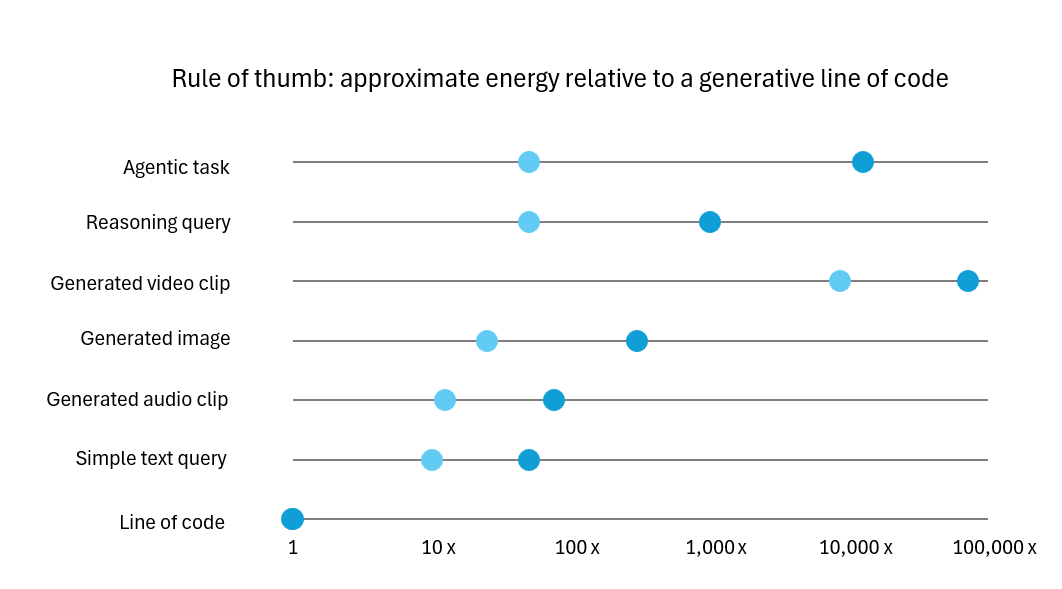
Note: rule of thumb figure above is a rough approximation based on estimated number of tokens per task (and energy consumption used in the case of video generation) and is helpful to give a relative sense of scale by orders of magnitude, but should not be taken as precise values. Real energy consumption will vary by model, IT hardware, task and input/output characteristics.
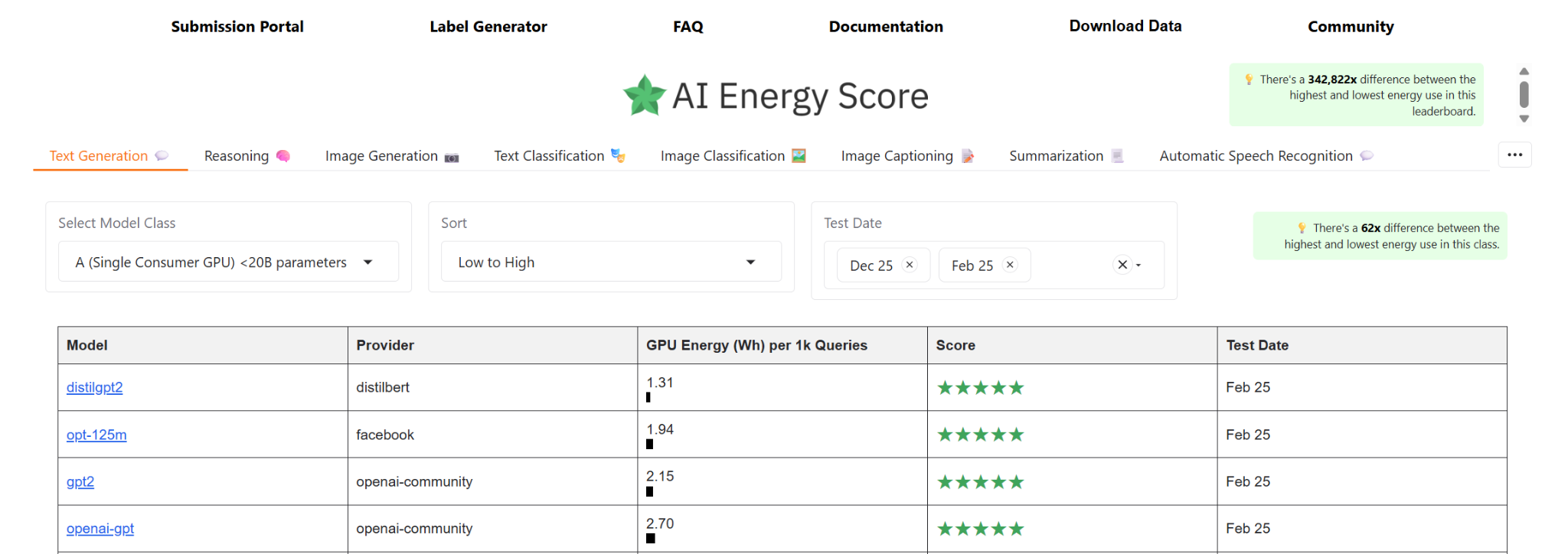
For open models, resources like AI Energy Score and ML.Energy leaderboards can help you assess energy efficiency of models that have been tested on different GPU configurations.
There are also tools that can be used to approximate impact for different uses. While these are not perfect, they can be helpful as reference points and as a starting point to track impact.
Tools: ecologits calculator
Improving your estimates over time as methods and data evolves

Taking an efficiency mindset: use it when it's genuinely helpful and with a frugal approach to minimise both environmental and financial costs
Establish a clear vision and hypothesis for how it will help for each use case, such as:
Consider all available options and technical solutions: Different uses of AI require different approaches:
Use cost as your guide to help make efficient decisions in use
The Frugal Approach to OpenAI API Costs, Frugal.co
Use AI Models Locally, Hugging Face
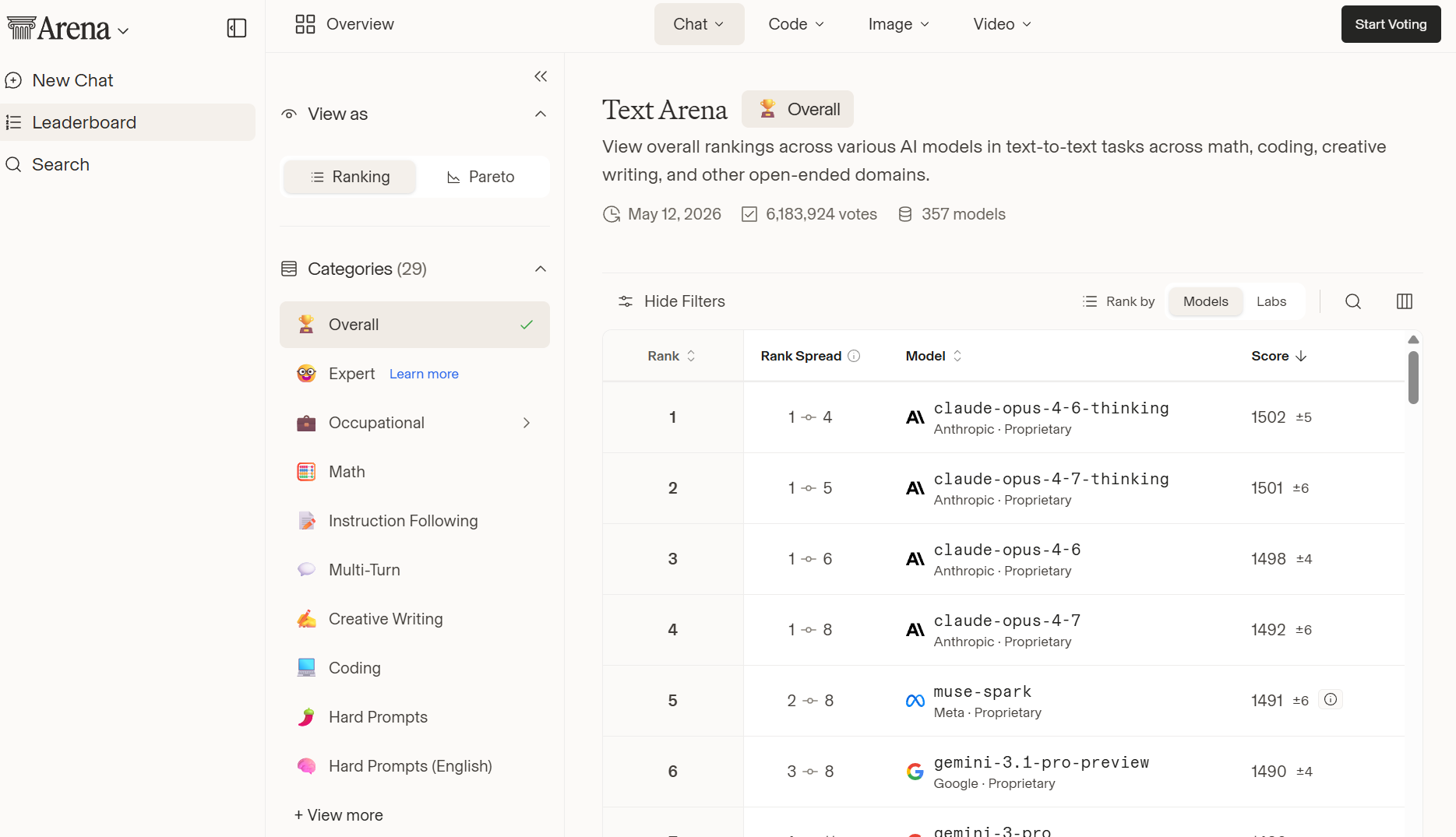
Arena.ai is a helpful resource to gauge perceived model performance (users compare outputs between models and vote for their preference) and compare against model size and costs
Use lower quality settings by default and only transition to higher quality and performance settings when needed. This is particularly helpful for higher compute tasks like image and video generation.
Tips for efficient use
For chatbots, reasoning and coding:
For image, audio and video generation:
For in-game use of generative AI:
Batch processing allows you to submit multiple requests together for asynchronous processing. This keeps costs lower while enabling more efficient scheduling and processing in the cloud.
Batch processing is a good solution to manage:
Guidance on batch processing from Claude API, Open AI and Gemini API
Manage tokens by keeping prompts tight, concise and effective and specifying output token limits.

Environmental impacts for AI should be integrated into existing assessment of procurement and service providers. You can assess AI service providers using similar sustainability criteria that are applied to other significant suppliers.
Consider whether suppliers publicly disclose environmental performance and climate targets. When information is available, consider whether AI services are supported by data centers with recognized energy certifications or sustainability credentials. Studios can consider a scorecard system or similar to support informed internal decision-making.
Reporting of energy and emissions associated with AI products and services
Environmental performance is only one consideration among others, along with ethics, security, privacy, safety, quality, and commercial requirements. Choose the most suitable options that support your objectives and requirements.

For many studios, emissions associated with the usage of AI tools will fall under scope 3 emissions, category 1. For studios with significant usage of cloud-based AI tools, scope 3 emissions related to cloud services could potentially increase meaningfully. However, for many studios, cloud services typically represent a small portion of total emissions.
Studios should review their carbon reduction plans to consider current and future impacts related to their usage of AI, by:
We think for many studios that existing carbon reduction targets can still be achievable, but transition plans will need to account for emissions as they are today while also planning for future uncertainties.


